

Climate Change Cookery
Recipes and Resilience in England's Little Ice Age, 1550–1700
Contemporary concerns about climate change often overlook past periods of upheaval despite the insights they can provide. In Climate Change Cookery, Madeline Bassnett turns back to the Little Ice Age, a period of global cooling that peaked in severity from around 1550 to 1700. Studying sixteenth- and seventeenth-century recipe collections, almanacs, diaries, manuscripts, and weather pamphlets, she details the close-knit relationship between weather, food scarcity, and famine.
Through an examination of references to the weather as a key element or influence on food practices, Bassnett shows how early modern households understood seasonal food cycles and developed systems to become more resilient during an unpredictable period. Identifying and discussing practices involving “weathering,” “seasoning,” and “preserving,” this book investigates how perceptions of food insecurity, alongside strategies for resilience, were shared among networks of readers. Authors and works of particular focus include Hugh Plat’s Sundrie Newe and Artificiall Remedies Against Famine (1596) and Delightes for Ladies (1600), the seventeenth-century manuscript recipe books of Ann Fanshawe and Mary Evelyn, and Hannah Woolley’s The Queen-Like Closet (1670).
Connecting the historical record with modern concerns about disruptions to food production and distribution, Climate Change Cookery demonstrates how people increased their local and ecological awareness in a previous era.
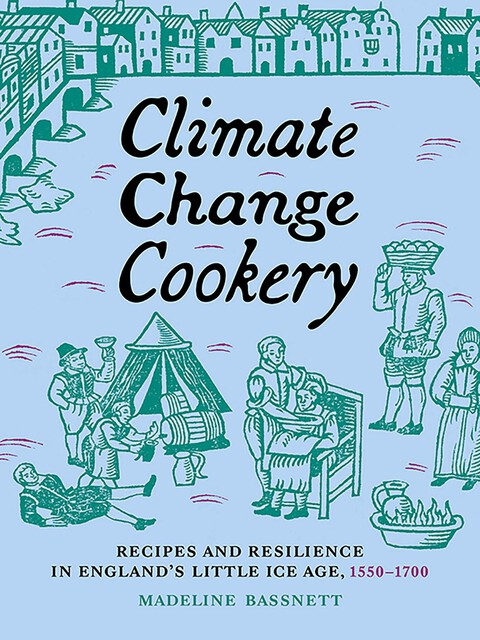
Table of Contents
Metadata
- isbn9781988111698
- publisherConcordia University Press
- publisher placeMontreal, QC
- restrictionsCC BY-NC-ND 4.0
- rightsCopyright Madeline Bassnett © 2026.
- series titleMedia Before 1800
- doi
We use cookies to analyze our traffic. Please decide if you are willing to accept cookies from our website. You can change this setting anytime in Privacy Settings.